An exchange rate is the relative price of a currency. When USD/KRW rises, the dollar is getting more expensive and the won is weakening. FX is one of the hardest things to forecast because so many forces tangle together, but once you understand how a few big drivers work, the news reads differently.
What an exchange rate is
An exchange rate is the ratio at which two currencies trade. "USD/KRW 1,300" means it takes 1,300 won to buy one dollar. When that number rises, the won is weaker and the dollar is stronger; when it falls, the won is stronger. One thing that trips people up: "the rate went up" usually means the base currency, the dollar, got more expensive, which is another way of saying the won got weaker. The number rises while your own money weakens, and that feels backwards.
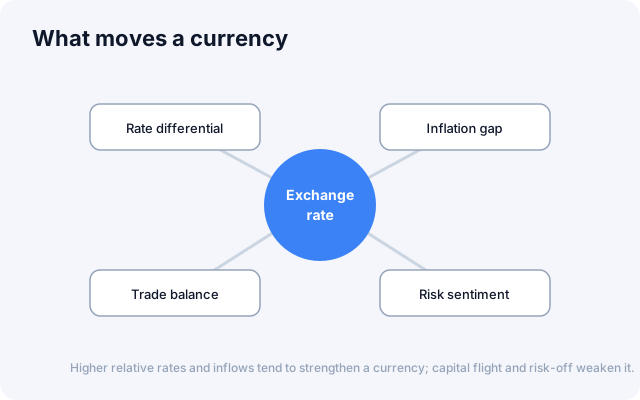
Higher relative rates and inflows tend to strengthen a currency; capital flight and risk-off weaken it.
The key drivers
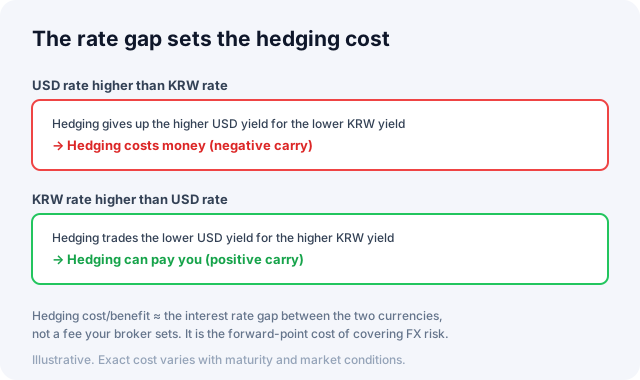
Money chases higher yields. When a country raises rates, demand for its currency tends to rise, creating upward pressure, and when the US hikes, global money flows into dollar assets and the dollar tends to strengthen. But markets price the expected path of rates, not the current level. A hike that's already happened is baked in, and the currency only strengthens further if new expectations of additional hikes appear.
A currency in a high-inflation country buys less over time, so it tends to weaken in the long run, a relationship known as purchasing power parity. The "Big Mac index," which compares burger prices across countries, is an easy illustration of the idea. Trade matters too: strong exports bring in foreign currency that has to be converted into the home currency, which is a source of strength, while chronic deficits push the other way.
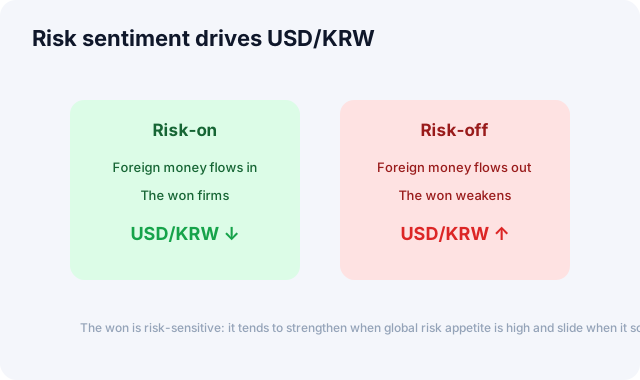
In a crisis, safety beats yield, so money piles into havens like the dollar, yen, and Swiss franc, pushing them up. Paradoxically, the dollar can strengthen even when the US is the source of the trouble, an effect tied to its role as the world's reserve currency. Direct FX intervention, the policy stance of tightening versus easing, and political or geopolitical risk all matter a great deal on top of this.
The carry trade
The clearest illustration of how rate differentials move FX is the carry trade: borrow a low-yield currency, say the yen, invest in assets in a high-yield one, say the dollar, and pocket the spread. When carry is in fashion, the low-yield currency keeps weakening and the high-yield one strengthens. The danger comes when markets wobble. As risk aversion spikes, investors unwind all at once, buying back yen to repay the loan, and a currency that had been weak can surge in a matter of days. A lot of FX shocks come from exactly this.
How FX feeds into markets
A weak home currency helps exporters, since they can sell the same goods more cheaply in foreign-currency terms and gain price competitiveness. It hurts firms that import raw materials and parts, by raising their costs, so FX cuts winners and losers by sector. A weaker currency also raises the price of imports, feeding inflation (CPI); the central bank then hikes rates to fight that inflation, which can strengthen the currency again, so the two stay intertwined. When a currency is expected to weaken, foreign investors may also pull money out of stocks and bonds to avoid FX losses, which is why FX and equities often swing together in emerging markets.
How to read it
- Watch it with rate differentials. The big direction of an exchange rate is largely explained by the expected rate gap between two countries. Follow it alongside the US 10-year Treasury yield and the Fed's direction.
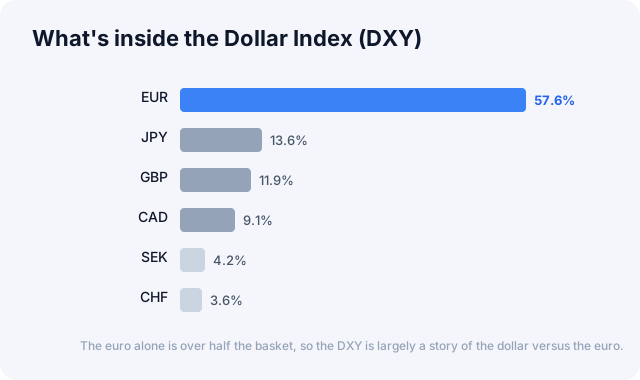
- Compare it against the dollar index. Use the dollar index (DXY) to see overall dollar strength, so you can tell whether a move in a single pair comes from the dollar being strong or that currency being weak.
- Treat short-term spikes as sentiment and positioning. Crisis flows and carry unwinds happen fast and can reverse just as fast. Separate the trend from a temporary shock.
- Distinguish nominal from real. The news quotes the nominal rate, but the real rate, adjusted for inflation differences, is closer to the true picture of competitiveness.
FAQ
Q. If the rate rises and the home currency weakens, is that bad for stocks? Not uniformly. It's good for export-heavy companies and bad for importers and domestic-demand names. That said, a sharp depreciation can trigger foreign outflows, which weighs on the broad market.
Q. Why does a currency sometimes weaken even after a rate hike? Markets price in hikes that are already known in advance. If the size disappoints, or expectations for further hikes fade, the currency can weaken despite the hike. When recession fears dominate, risk aversion can override rates entirely.
Q. Can an individual forecast exchange rates? Short-term forecasting is extremely hard even for professionals. Rather than trying to call the direction, it's more useful to track changes in the big drivers, like rate gaps, the dollar index, and the trade balance, and focus on understanding why a move happened.
Indicators worth watching alongside
The Global Market Dashboard shows the dollar index (DXY), USD/KRW, and Treasury yields together, so you can see how FX interlocks with rates and the dollar. To frame the whole market first, start with Getting Started with Global Markets.
Primary source: H.10 FX rates, Federal Reserve
This article is for informational purposes only and is not investment advice.