For a Korean investor, the USD/KRW exchange rate is no mere travel-budget calculator. The rate is deeply entangled with exporters' earnings, the flow of foreign capital, import prices, and even the direction of the KOSPI.
What USD/KRW is
USD/KRW is the amount of won needed to buy one dollar. If the rate rises from 1,300 to 1,400, it means you must pay more won for the same dollar, so the won has weakened. "A rising rate means a weaker won" is easy to find confusing at first.
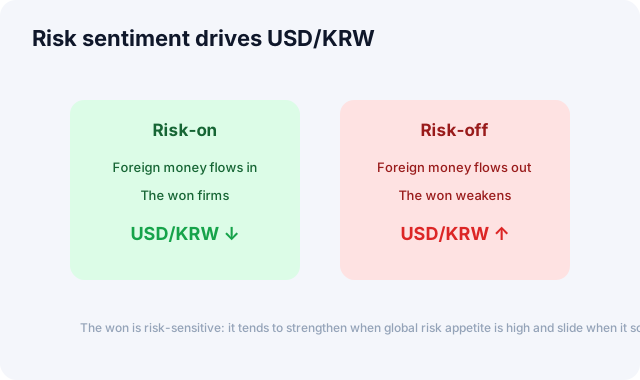
The won is risk-sensitive: it tends to strengthen when global risk appetite is high and slide when it sours.
What moves the rate
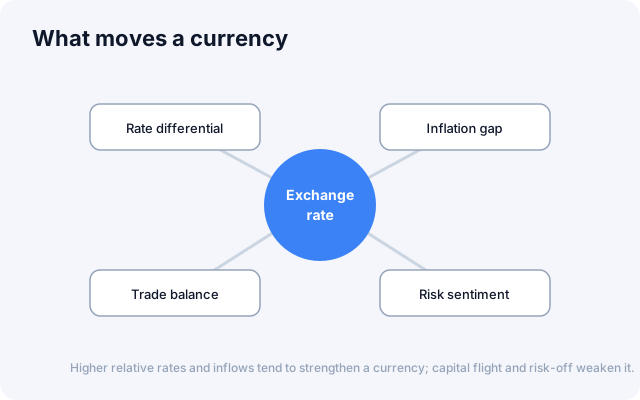
USD/KRW is driven by both dollar-side and won-side factors.
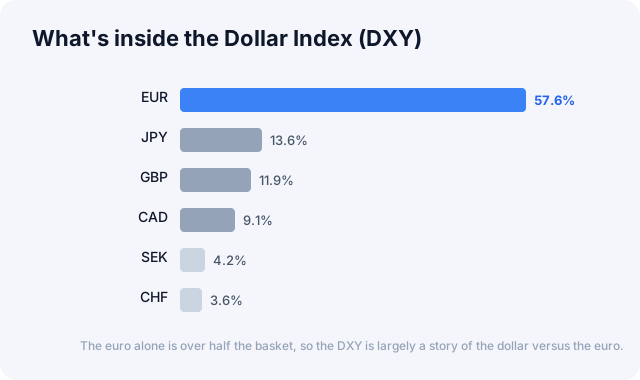
When the dollar broadly strengthens, whether from U.S. rate hikes or safe-haven demand, USD/KRW tends to rise, and the global dollar trend captured by the dollar index is the big backdrop here. The Korea-U.S. rate gap matters too: when U.S. rates run higher than Korea's, money shifts toward the dollar, creating downward pressure on the won. Trade and current-account balances play a role as well, since strong exports bring dollars flowing in and strengthen the won, while the reverse weakens it. Foreign capital flows matter directly: when foreigners buy Korean stocks and bonds, demand for won rises and the rate falls, a stronger won, while selling and leaving pushes it up. And in a global crisis, risk appetite drops and emerging-market currencies like the won tend to weaken along with it.
How a rising rate, meaning a weaker won, affects stocks
A weaker won cuts both ways.
On the favorable side, exporter earnings improve, since dollars earned abroad convert into more won. This can benefit Korea's flagship exporters in semiconductors, autos, and similar industries, and price competitiveness improves somewhat too.
The burdensome side is real as well. For a foreign investor, a weaker won lowers the dollar value of Korean assets, and if the rate looks set to rise further, they may sell stocks and leave to avoid FX losses, which pressures the KOSPI lower. Oil, raw materials, and parts also cost more to bring in, lifting corporate costs and consumer prices. Companies with large dollar debts face a bigger repayment burden on top of that.
So rather than the simple formula that a higher rate is good for exporters, it's worth watching the speed and reason for the move, plus how foreign flows respond. A gentle weakening can be a tailwind for exporters, but a sharp one tends to invite foreign outflows and volatility.
How to read it
- Pair it with the global dollar. USD/KRW largely follows the broad strength of the dollar, so watch the dollar index alongside it.
- Weigh speed as much as direction. Whether the move is a spike or a gentle drift sways sentiment more than direction alone.
- Cross-check foreign flows. Whether foreigners turn net sellers during a rate climb is a clue for the KOSPI.
Indicators worth watching alongside
USD/KRW reads more clearly when grouped with the dollar index, the Korea-U.S. rate gap via U.S. Treasury yields, and the KOSPI and foreign-flow trends.
The Global Market Dashboard shows USD/KRW on one screen with the dollar index, U.S. Treasury yields, and major indices. Check which way the rate is heading now.
Primary source: Bank of Korea
This article is for informational purposes only and is not investment advice.