Eight times a year, investors around the world watch the same day at the same hour: the result of the U.S. Federal Reserve's monetary-policy meeting, the FOMC. The Fed's rate decisions directly affect asset prices well beyond the U.S., including in Korea.
What the policy rate is
The Fed's policy rate, the federal funds rate, is the target range for what banks charge each other on ultra-short-term loans. This rate is the starting point for all interest rates. When it moves, deposit and loan rates, short-term bond yields, and ultimately the borrowing costs of companies and households all move with it.
The Fed has two broad mandates: price stability and maximum employment. It raises and lowers rates to balance the two. When inflation overheats, hiking rates makes it more expensive to borrow, which cools demand and prices. When the economy slows, cutting rates makes borrowing cheaper, which stimulates spending and investment.
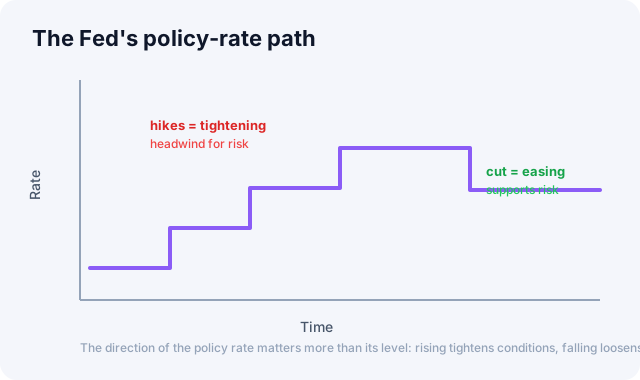
Direction matters more than level: a rising policy rate tightens conditions, a falling one loosens them.
How the FOMC decides
The FOMC, or Federal Open Market Committee, holds eight scheduled meetings a year and sets rates by vote. What the market watches isn't just the decision itself. The signal about the path ahead is often more important.
The statement is official language describing the economic assessment and policy direction, and even a one-word change gets parsed closely. The dot plot shows each member's projection for the future rate level, marked as a dot, and reveals the Fed's internal expectations for where rates are headed. The chair's press conference matters too, since nuance and tone can drive the market's reaction as much as the numbers do.
So even a hold can send the market down if the commentary reads as hawkish, meaning tightening-leaning, and even a hike can lift it if a dovish, easing-leaning signal emerges alongside it.
How rates ripple into assets
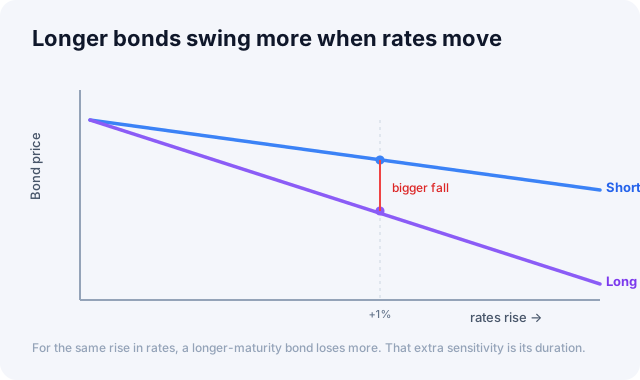
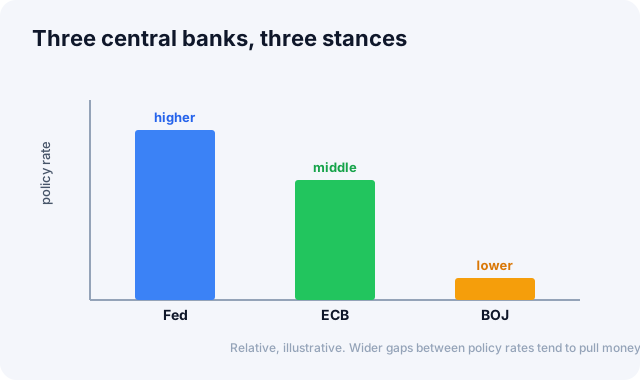
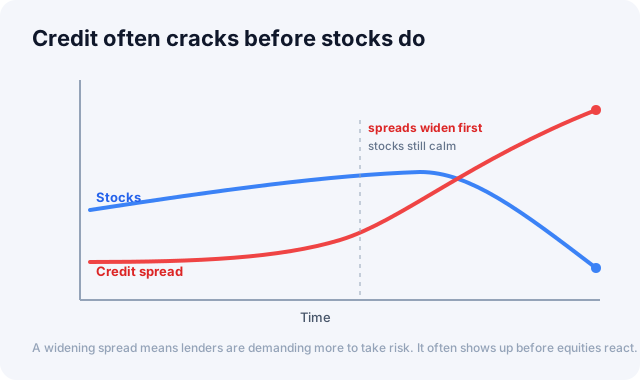
Rising rates lift the discount rate, which weighs on stock valuations, and growth stocks, whose profits sit far in the future, feel this especially. Expectations of cuts work the other way, favoring risk assets. On the bond side, rate hikes push down existing bond prices, since rates and prices move opposite each other, and short-term yields are the most sensitive to the policy rate. And when U.S. rates rise above other countries', the dollar tends to strengthen, which then ripples into emerging markets, commodities, and the Korean won.
Expectations are already in the price
One key principle here: the market rarely reacts much to a decision it already expected. At a meeting where a hike was a near-certainty, the actual hike often passes without incident. What moves markets is the gap between expectation and reality, the surprise, plus shifts in expectations about the future path. That's why "buy the rumor, sell the news" holds up as well as it does.
How to read it
- Weigh the path over the decision. More than this one move, how many more hikes or cuts, and until when, is the crux.
- Watch the Fed's rationale. Whether it's focused on inflation or on employment shapes the next step.
- Compare it with market expectations. Whether the Fed comes across as more hawkish or more dovish than the rate expectations already priced into futures determines the reaction.
Indicators worth watching alongside
The Fed funds rate comes to life in context alongside inflation (CPI), the yield curve, and the dollar index.
In the macro tab of the Global Market Dashboard, you'll find the U.S. policy rate, Treasury yields, and price and jobs data on one screen. See for yourself the environment the Fed faces.
Primary source: FOMC calendar and statements, Federal Reserve
This article is for informational purposes only and is not investment advice.