In global markets, saying the dollar is strong or the dollar is weak isn't just a remark about exchange rates. As the world's reserve currency, the dollar's value broadly affects stocks, commodities, emerging-market assets, and even the Korean won. The flagship gauge that captures that flow in a single number is the Dollar Index, or DXY.
What the dollar index is
The dollar index measures the value of the U.S. dollar against a basket of major developed-market currencies. The most widely used version is a weighted average of the dollar's value against six currencies: the euro, Japanese yen, British pound, Canadian dollar, Swedish krona, and Swiss franc.
Because the euro carries more than half the weight, the dollar index is in effect driven heavily by dollar versus euro. The base period is set to 100, and a reading above that means the dollar has strengthened since then.
One caveat worth knowing: this index is centered on developed-market currencies. It excludes emerging-market currencies like the won or yuan, so to see how strong the dollar is against all the world's currencies, you'd also want to look at a broader effective-exchange-rate measure.
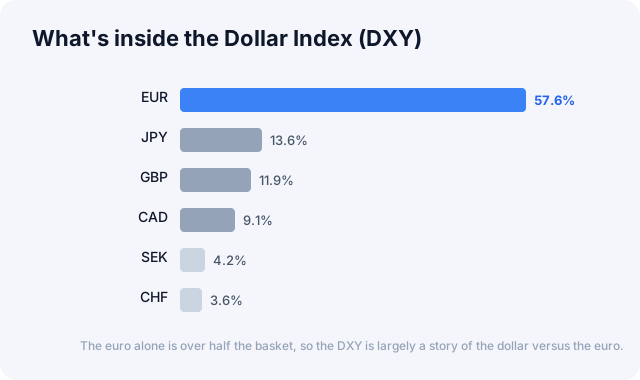
The euro alone is over half the basket, so the DXY is largely the dollar versus the euro.
What moves the dollar
The dollar's value is the result of a tug-of-war among many forces, but a few drivers matter most.
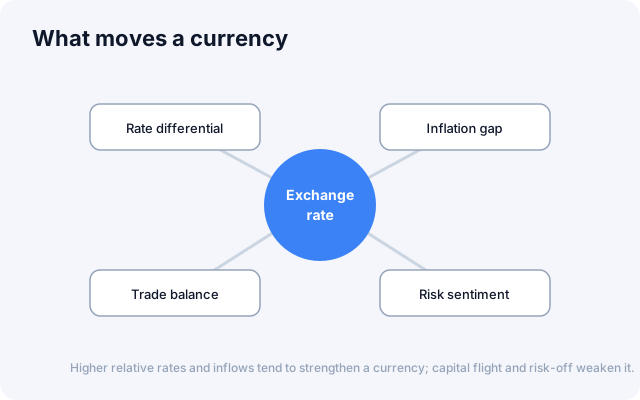
When U.S. rates rise above other countries', money chases the higher yield into the dollar, strengthening it, which is why the dollar is often strong during Fed hiking cycles. In a financial crisis or geopolitical shock, investors flee to what they consider safest, U.S. Treasuries and the dollar, which is why the dollar tends to strengthen in a crisis. When the U.S. economy runs relatively strong compared with the rest of the world, the resulting growth and rate gap makes the dollar attractive. And over the long run, inflation and fiscal or trade balances also influence the dollar's direction.
What happens to markets when the dollar strengthens
A strong dollar ripples across many assets.
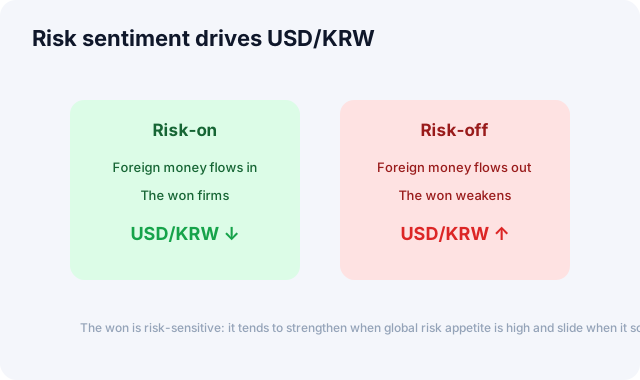
Gold, oil, and other global commodities are priced in dollars, so when the dollar gets more expensive, it takes fewer dollars to buy the same goods, which tends to weigh on prices. This is part of why gold and the dollar often move in opposite directions. Companies and governments that borrowed in dollars face a heavier repayment burden as the dollar strengthens, and money can flow out of emerging markets as a result. A strong dollar also erodes the price competitiveness of U.S. goods and shrinks profits when overseas earnings get converted back into dollars, pressuring exporters and multinationals. And for Korea, dollar strength usually pushes the USD/KRW rate up, meaning a weaker won, which affects import prices and foreign capital flows.
In a weak-dollar phase, the opposite generally holds, creating an environment that favors commodities, emerging markets, and risk assets.
How to read it
- Read the trend. The direction over weeks to months matters more than a single day's move.
- Pair it with rate differentials. The dollar's direction is largely explained by the rate gap between the U.S. and other major economies.
- Check for froth. A dollar that has climbed steeply in a short time can see a pullback.
Indicators worth watching alongside
The dollar reads more richly when grouped with U.S. Treasury yields, the gold price, and emerging-market or risk-asset sentiment. If rates rise and the dollar strengthens while gold weakens, for instance, that reads as a consistent signal that the market is responding to tightening and dollar strength together.
The Global Market Dashboard shows the dollar index on the overview screen alongside dollar and rate indicators in the macro tab. See for yourself which way the dollar is heading now.
Primary source: H.10 FX rates, Federal Reserve
This article is for informational purposes only and is not investment advice.