Whenever markets turn nervous, one asset shows up like a cure-all: gold. How did a metal that pays neither interest nor dividends become a store of value for thousands of years, and a safe haven in the modern portfolio?
Why gold is called a safe haven
Gold's defining trait is that it is no one's liability. A stock is a claim on a company; bonds and cash rest on the credit of whoever issued them. Gold, by contrast, is valued in its own right, so it is less affected even when a particular country or company wobbles.
On top of that, gold's supply grows slowly and only in limited amounts. Central banks can print money in bulk, but gold has to be mined, so it's seen as a way to preserve relative value when the value of currency is shaken. That's why demand piles in during crises, high inflation, and bouts of distrust in money.
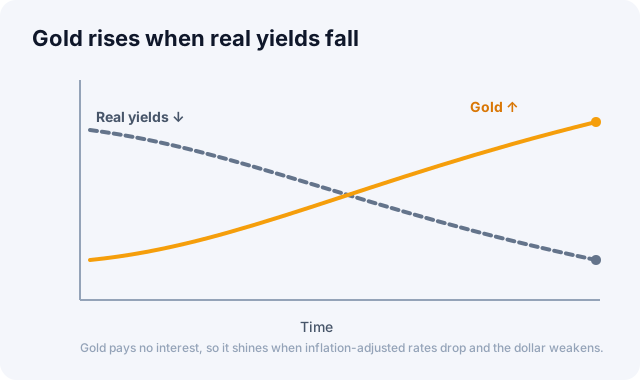
Gold pays no interest, so it shines when inflation-adjusted rates drop and the dollar weakens.
The key forces that move gold
Because gold pays no interest, it's paradoxically most sensitive to the rate environment.
Real rates are the single most important variable. When the real rate, meaning the nominal rate minus inflation, is low or negative, the opportunity cost of holding gold instead of an interest-bearing asset shrinks, which favors gold. When real rates rise, interest-bearing assets become attractive again and gold gets held back. Gold is priced in dollars too, so it usually moves opposite the dollar: a weaker dollar makes gold cheaper for holders of other currencies, lifting demand. When prices rise fast or confidence in a currency erodes, store-of-value demand grows, and shocks like war or a financial crisis send money into gold in the short term. Central-bank purchases, along with jewelry and industrial demand, set a floor under the long-term price as well.
The trap in the phrase "safe haven"
We call gold a safe haven, but that doesn't mean its price is stable. In the short term, gold can swing as much as stocks. Here, "safe" doesn't mean low volatility. It means gold moves differently from other assets, with low correlation, which provides diversification in a crisis.
Gold also generates no cash flow. With no dividends or interest, valuing it is murkier than valuing stocks or bonds, and it depends entirely on supply, demand, and the macro backdrop.
Its role in a portfolio
Many investors hold a small allocation to gold as insurance. In normal times it's hard to expect big returns from it, but it can act as a cushion when stocks and bonds wobble at the same time. The point is less about making money with gold than about lowering the volatility of the whole portfolio.
How to read it
- Watch it with real rates. Gold's broad direction is largely explained by real rates.
- Compare it with the dollar. During dollar-strength phases, gold tends to face a headwind.
- Distinguish the type of demand. Whether it's crisis-driven short-term demand or structural central-bank buying determines how durable the move is.
Indicators worth watching alongside
Gold reads more richly when grouped with real rates, meaning Treasury yield minus inflation, the dollar index, and market sentiment.
The Global Market Dashboard provides the gold price together with Treasury yields, the dollar index, and inflation gauges. See for yourself whether the environment now favors gold.
Primary source: Research, World Gold Council
This article is for informational purposes only and is not investment advice.