An option is a contract that gives you the right to buy or sell something at a set price, and it is where price, time, and fear all meet. Used well it hedges risk; used carelessly it burns money fast. Here is the plain version.
What an option is
An option gives the buyer the right, but not the obligation, to buy or sell an underlying asset at a fixed price (the strike) before a set date (expiry). For that right the buyer pays a price called the premium. A call is the right to buy; a put is the right to sell. The most a buyer can lose is the premium paid, while the seller collects that premium up front but takes on the larger risk.
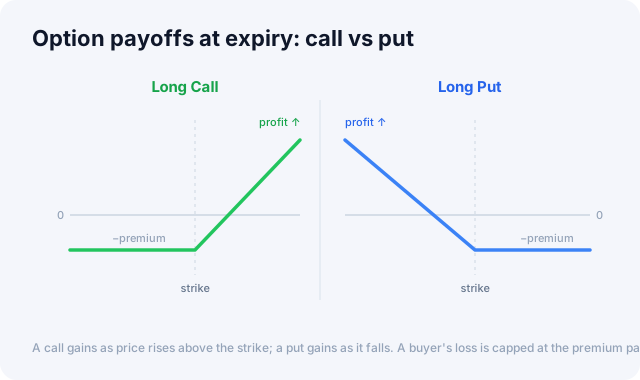
A call gains as the price rises above the strike; a put gains as it falls. A buyer's loss is capped at the premium paid.
Calls and puts
Buying a call is a bullish bet: you profit if the price climbs above the strike plus the premium you paid. Buying a put is bearish, or a form of insurance, because it gains value as the price falls. That is exactly why investors buy puts to protect a stock they already hold. Selling options flips the payoff around. A seller earns the premium immediately and hopes the option expires worthless, but the downside can be large, so it is not where a beginner should start.
| You buy a | You profit when | Most you can lose |
|---|---|---|
| Call | Price rises above strike + premium | The premium paid |
| Put | Price falls below strike − premium | The premium paid |
What moves an option's price
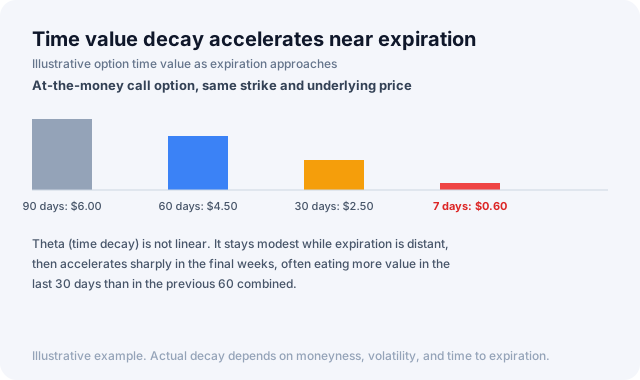
An option's premium has two parts. Intrinsic value is how far in-the-money it already is, which for a call is the price minus the strike when that figure is positive. Time value is everything else, and it rests on two things: how much time is left, and how much the market expects the price to swing. More time and more expected movement both make an option worth more.
💡 Tip: Time value decays as expiry nears, a drag called theta, and it speeds up in the final weeks. A correct view that arrives too slowly can still lose money.
Options and the VIX
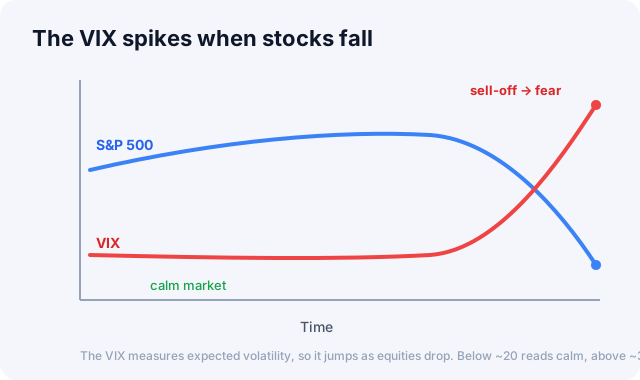
The expected movement priced into an option is called implied volatility. When traders brace for bigger swings they pay up for options, and implied volatility rises. The VIX is simply the 30-day implied volatility of S&P 500 options rolled into a single number, which is why it earns the nickname the market's fear gauge. When the VIX jumps, options across the board get more expensive, so hedges bought after the scare already cost more.
Common beginner mistakes
The classic trap is buying cheap, far out-of-the-money options as lottery tickets, then watching time decay bleed them toward zero. Another is ignoring volatility: buying options when implied volatility is already high means overpaying, so even a correct call on direction can lose.
⚠️ Caution: Selling options can lose far more than the premium you collect. Never sell uncovered (naked) options until you fully understand the downside.
Indicators worth watching alongside
Options make more sense next to the volatility and sentiment they price.
The Global Market Dashboard shows the VIX, the put/call ratio, and the Fear & Greed Index together, so you can gauge whether options are cheap or expensive before you trade them.
Further reading
For a deeper dive, Lawrence McMillan's Options as a Strategic Investment is the standard reference, though it runs advanced. Beginners are better served starting with the basics above.
Primary source: Options Industry Council (OCC)
This article is for informational purposes only and is not investment advice.